
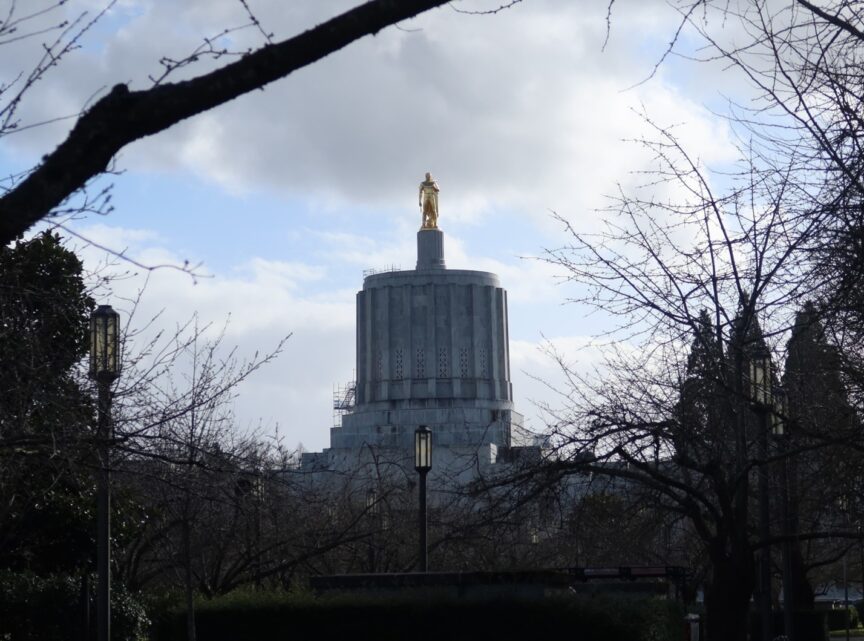
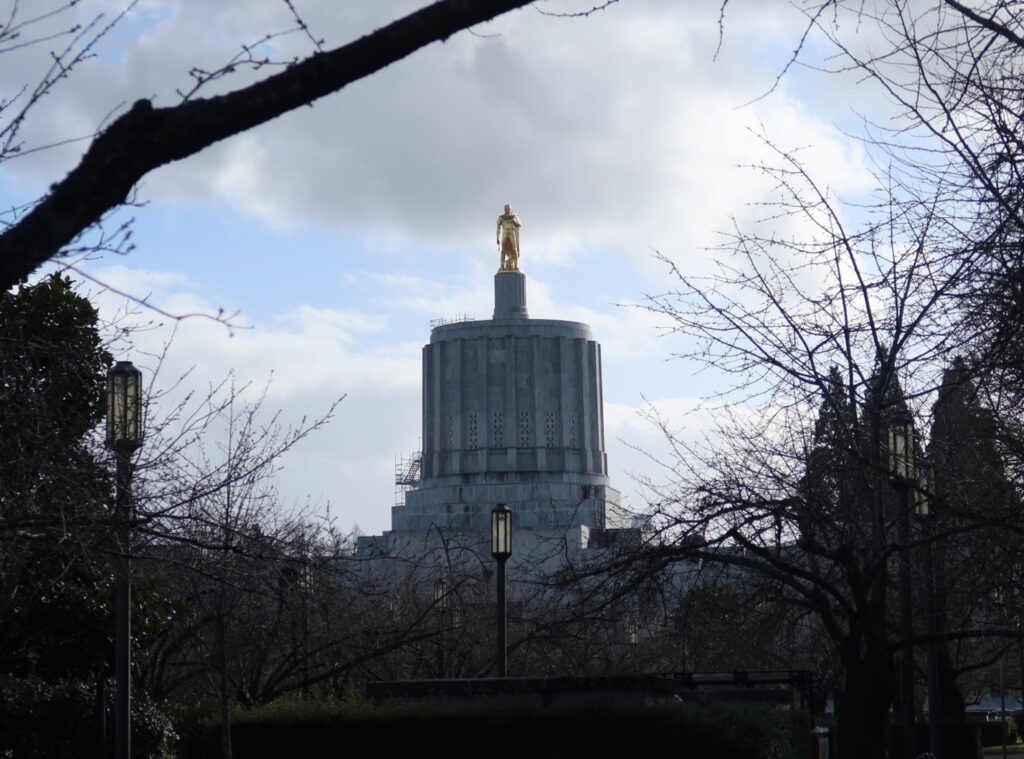
On February 2nd, the Oregon legislature commenced a “short session” that will continue into early March. As always, Trout Unlimited is closely tracking and engaging on the policy and budget issues related to wild steelhead and Oregon rivers. Here’s an update on what’s in play:
Salmon Credit (i.e., Developing Oregon’s Waterways)
For the fourth time in nearly as many years, TU is opposing a waterway development proposal with the catchy—but misleading—name “Salmon Credit.”
Senate Bill 1584 would require the State of Oregon to establish a program that allows developers to destroy functioning habitat in one place, and attempt to offset that in another area—potentially an entirely different watershed—by creating new habitat from whole cloth. The bill does not require a net increase in habitat (i.e., more than 1:1 mitigation). A key component of the bill is the establishment of a “Salmon Credit Trust Fund” that developers pay into, with dividends from the Fund to landowners with a related project on their land. Development mitigation programs already exist under Oregon law, and state agencies have raised important concerns about the feasibility of implementing this different approach over the years.
Advocates for the bill argue that the bill creates important financial incentives for landowners to allow restoration projects on their land. Trout Unlimited shares an interest in seeing more good projects on private property, but we believe that there are other mechanisms and opportunities for incentivizing that important work, rather than creating this complicated, untested, and expensive new program with no demonstrable demand from developers. (Read TU’s written testimony here.)
Water Law Exemptions for Mid-Columbia Irrigators
House Bill 4006 would exempt just one group of irrigators in eastern Oregon from a suite of important water laws.
Specifically, the legislation would allow the Mid-Columbia Water Commission—a large water right holder near Pendleton—to change their points of diversion (e.g., canal headgate location), places of use (e.g., farm field location), and type of use (e.g., irrigation, municipal) without applying to the State or needing approval from state water managers. This would be a tremendous departure from the norms and create an important one-off exemption in the water code, while also materially diminishing the role of Oregon Water Resources Department (WRD) in managing this important resource.
As TU testified in opposition to the bill, the concept would exempt only one water right holder from laws that ensure equitable and evenhanded distribution of water. Under Oregon law, all water is owned by the public; water right holders just have a legal right to use it. This bill conflicts with that core fundamental principle by almost entirely removing WRD from the processes of regulating and managing a water user.
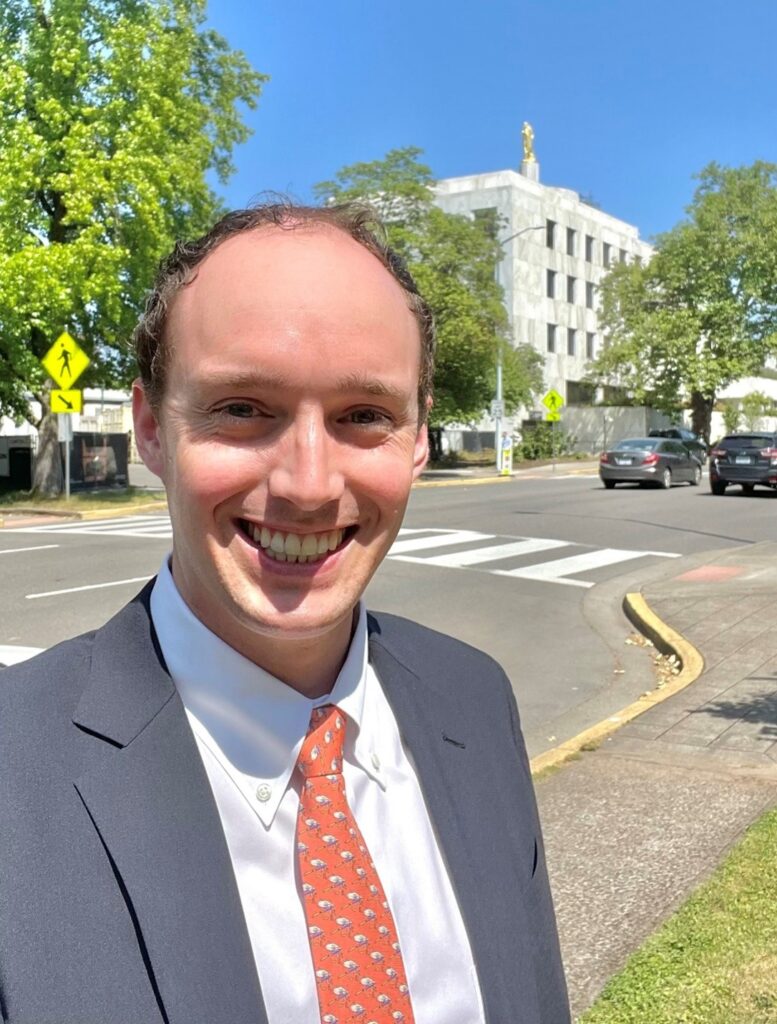
Above: TU’s Oregon Policy Director James Fraser migrates seasonally to Salem. He prefers riverine habitats but will move into Capitol hallways and hearing rooms as necessary to advocate for healthy streams and fish.
Budget: Natural Resource Agencies and Umpqua Basin Hatcheries
Agency biennial budgets are crafted in odd-year long sessions in Oregon, but there are always budget matters to address during short sessions (e.g., agency budget clean-up, corrections, emergencies, pressing issues that cannot wait a year, etc.).
This session will be especially heavy on budget discussions because the State of Oregon is facing a $650 million budget gap. Oregon’s 14 natural resource agencies receive only about 2.5 percent of the state’s General Fund and Lottery Fund dollars, meaning that budget reductions of only a few percentage points will be disruptive to agencies like the Oregon Department of Fish & Wildlife (ODFW) and WRD, while not resulting in material cash savings for the State.
TU and allies in the Oregon Water Partnership are advocating that the Legislature’s budget-writers spare natural resource agencies from budget cuts that would impede good water management and proactive conservation efforts. We’re also urging that the Legislature ensure continued full funding for Private Forest Accord (PFA) programs at ODFW and Oregon Department of Forestry (ODF).
The 2026 session also includes continued discussions about whether ODFW should rebuild Rock Creek Hatchery in the North Umpqua watershed. This facility burned down almost entirely in the 2020 Archie Creek Fire, and ODFW has not yet decided how to spend the insurance proceeds, or related Federal Emergency Management Agency (FEMA) dollars, for that loss. During the 2025 legislative session, the Legislature directed ODFW to provide a report on potential post-fire hatchery operations in the Umpqua.
Recently, the agency submitted its analysis of options and general costs for rebuilding Rock Creek Hatchery infrastructure or otherwise replacing its production capacity. The agency’s report states that a full-rebuild of Rock Creek Hatchery would be “cost prohibitive . . . less likely to meet temperature requirements . . . overly reliant on costly and complex mechanical systems . . . and more vulnerable to future natural disasters.” TU agrees; we oppose a full rebuild of Rock Creek Hatchery and will continue participating in discussions with fish managers and policymakers as the State decides on next steps.
1.25% for Wildlife: New Funding for Species Conservation
The big-ticket item for conservation policy in the 2026 session is “1.25% for Wildlife” (House Bill 4134). This legislation would nominally increase the transient lodging tax (TLT) rate in Oregon by 1.25% and direct revenues to ODFW for implementing the state’s species conservation plan. For instance, a $200 hotel stay would cost an extra $2.50, which would go into a special state fund for conserving and restoring native species (both game and non-game) and important landscapes. TU supports the bill, and we’re engaged with both environmental and hunting and fishing coalitions in helping to engage legislators on the measure.
Summary
TU will be present and engaged throughout the 2026 session. The Oregon legislature’s website, OLIS, is the best way to keep tabs on the status of bills and amendments to draft language. OLIS is also the means of attending committee meetings remotely and submitting written testimony on bills under consideration.
James Fraser is TU’s Oregon Policy Director and can be reached at james.fraser@tu.org