

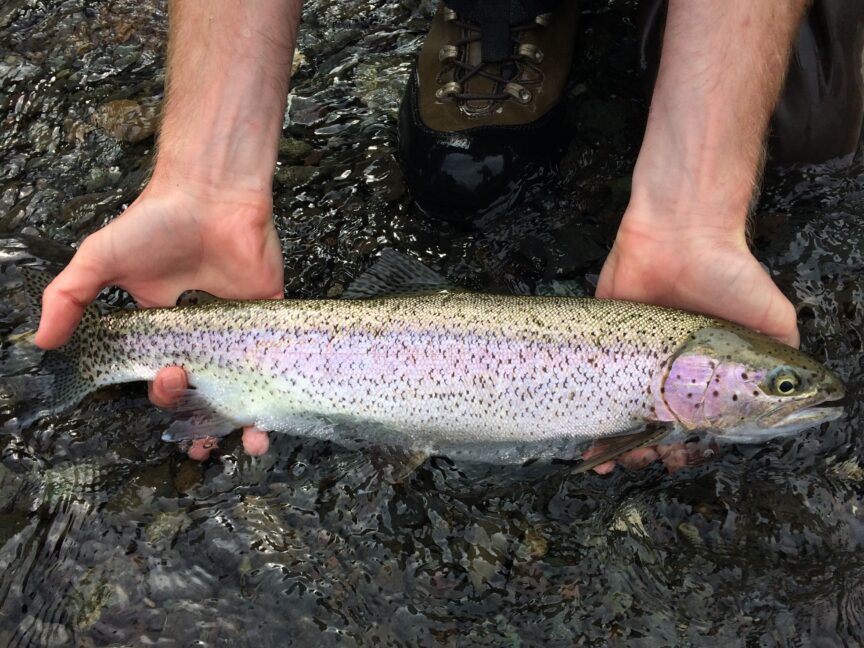
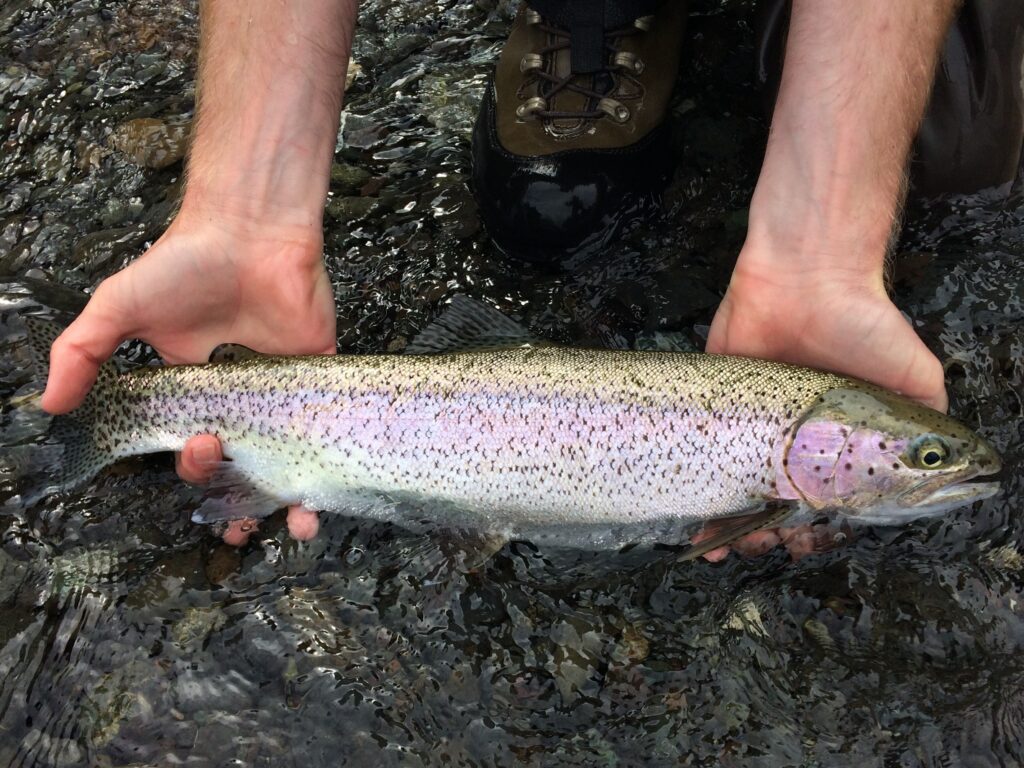
The new policy has good intentions, but a lack of enforceable rules makes potential benefits to wild steelhead and native trout populations uncertain
Following a petition filed in 2023 to protect the resident rainbow trout in anadromous waters, Washington’s Fish and Wildlife Commission (FWC) recently adopted the new Resident Native Trout Harvest Management Policy developed by WDFW fishery managers.
Let’s break down what this new policy does and, more crucially, what it doesn’t.
The original petition aimed to protect resident rainbow trout–an important life history component of steelhead–from harvest in anadromous waters throughout Washington State. This proposed rule change would have aligned the resident life history of rainbow trout with the anadromous life history in state fishing regulations.
In Washington, wild steelhead cannot be harvested. Only catch-and-release fisheries are allowed.
However, when the agency agreed to develop the policy, they expanded the scope to include native cutthroat populations and clarified that the new policy would not direct any actual changes to fishing regulations.

By their nature, FWC policies typically are meant to provide high-level guidance and directives to agency managers. This policy was unlikely to ever provide a blanket catch-and-release regulation for resident trout, as the original petition requested.
Throughout the process, it was evident that the Washington Department of Fish and Wildlife (WDFW) was set on developing a policy that bucked the status quo as little as possible. This is exemplified by the Department’s heavy reliance on the 41-year-old ‘stream strategy’ during the policy’s development, which the policy states “serves as the foundation for native trout regulations.”
While the stream strategy was innovative at the time of its development, it is outdated and does not contain information from the vast body of science around steelhead and resident trout biology and management the has been published in the intervening years.
Status of native trout populations
As of right now, very little is known about the status of resident rainbow and cutthroat trout populations across Washington State. As such, WDFW lacks the most basic biological data to understand potential harvest impacts on many resident trout populations.
In the few areas of Western Washington where data has been collected, it appears mature resident rainbow trout occur in low abundances.
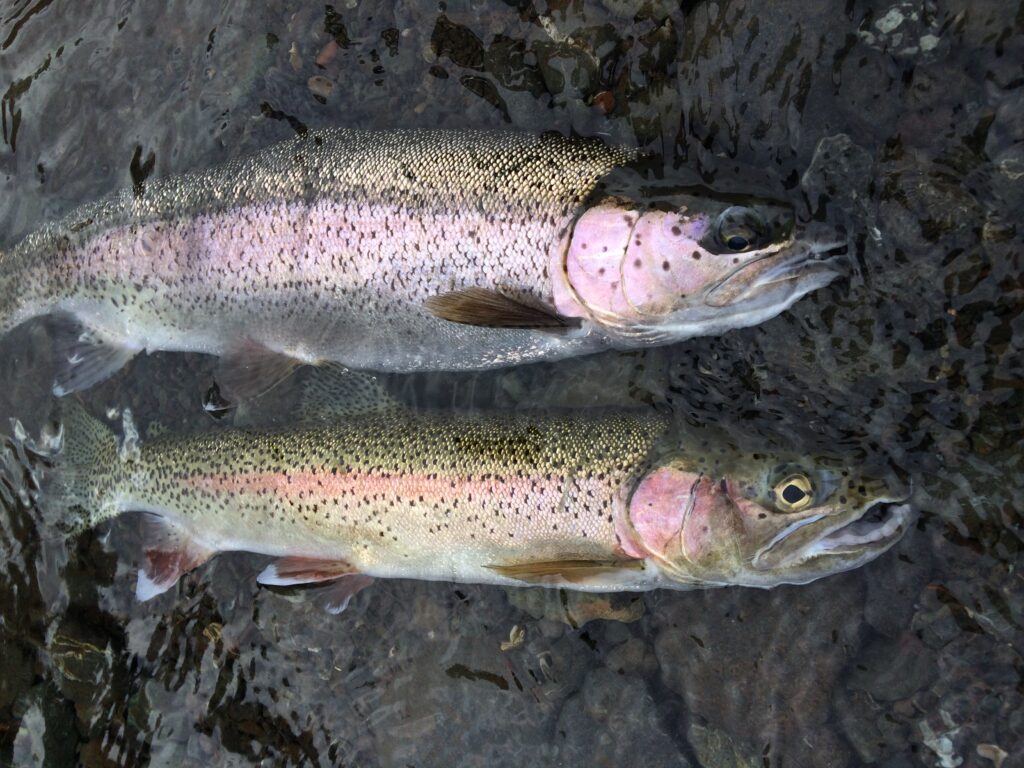
For example, my research on three Olympic Peninsula rivers between 2013-2018 indicates that mature resident rainbow trout (>12”) occur at low abundances (<50 fish per mile) even in streams with high quality habitat, catch-and-release regulations and limited seasons.
This research represents a small sample of streams in the region and for the most part the status of resident rainbow trout populations is unknown.
It would have made sense for the agency to adopt a conservation-focused best practice and develop the new policy around the precautionary principle, in which an action–such as allowing harvest–is restricted when there is a high degree of scientific uncertainty about the impact.
Based on public feedback shared at the three town halls held by WDFW staff, this was also the overwhelming consensus in the public comments, including those submitted by Trout Unlimited and the Washington Council of Trout Unlimited.
We acknowledge that attempting to monitor resident trout populations across all of Washington would be a monumental undertaking and a poor investment of limited state resources. However, allowing harvest of resident native trout is likely to have a detrimental impact on both steelhead and resident native trout populations wherever populations are in low abundance, whether that population status is known by managers or not.

Guiding principles
As written, the adopted policy provides loose guidance for WDFW to follow a conservation-based approach to resident native trout management across the state. If taken in good faith and at face value, there are some solid components to the new Native Trout Policy.
For example, the policy indicates that “as a priority, fishing rules should seek to achieve conservation objectives for resident native trout.”
Additionally, the policy also includes principles guiding consideration of impacts on anadromous populations and freshwater migratory life histories of native trout. For steelhead, these principles are particularly important, as large-bodied freshwater migratory (fluvial and adfluvial life history forms) rainbow trout can often be a lifeline for struggling anadromous populations. For example, up to 20 percent of the returning steelhead in the ESA-listed Yakima River population had resident rainbow trout mothers (Courter et al. 2013).
Concerns with the policy
However, these important components in the policy are also where the potential problems arise, as words matter when defining fishery management.
First, it is great to have language identifying the need to achieve conservation objectives for resident native trout. But the statement in the policy starts with ‘should,’ making it a choice instead of a directive for the agency.
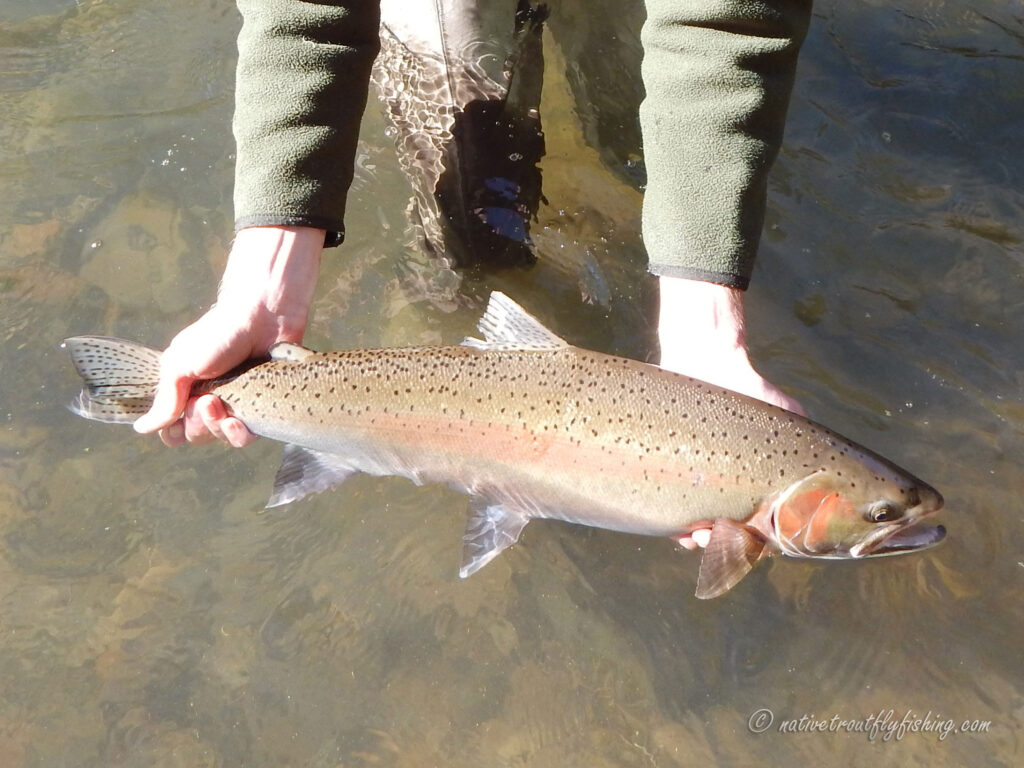
There also isn’t any clear identification of what the conservation objectives or parameters might be.
Similarly, of the nine guiding principles found in the policy, five of them, including the two mentioned above, begin with “consider,” providing fisheries managers with a choice of whether or not to even incorporate over half of the policy’s guiding principles into their decision making.
Because of this soft language and lack of parameters, it is unclear if the Native Trout Policy will actually provide any meaningful change to resident native trout management in Washington State. It leaves the potential outcomes dependent on the choices of leadership at the agency and across the various regions instead of mandating firm, enforceable parameters.
Despite the Commission’s vote to adopt the policy, these concerns seemed to be apparent to many of its members. Several Commissioners indicated that they would expect reports on its implementation in the coming years.
Implementation of the Native Trout Policy
It does appear that managers in some regions are already incorporating this new policy into their fisheries management approach. For example, many trout fisheries on the Washington Coast were shifted to catch-and-release during the winter steelhead season as part of the recent rulemaking process.
While this is an improvement, fisheries during these seasons are primarily focused on anadromous fish, with few anglers targeting resident trout. The general trout seasons were left untouched in the process and, ironically, these new regulations are actually less restrictive than many other parts of the state, where trout fisheries are completely closed between October 31st and the Saturday before Memorial Day.
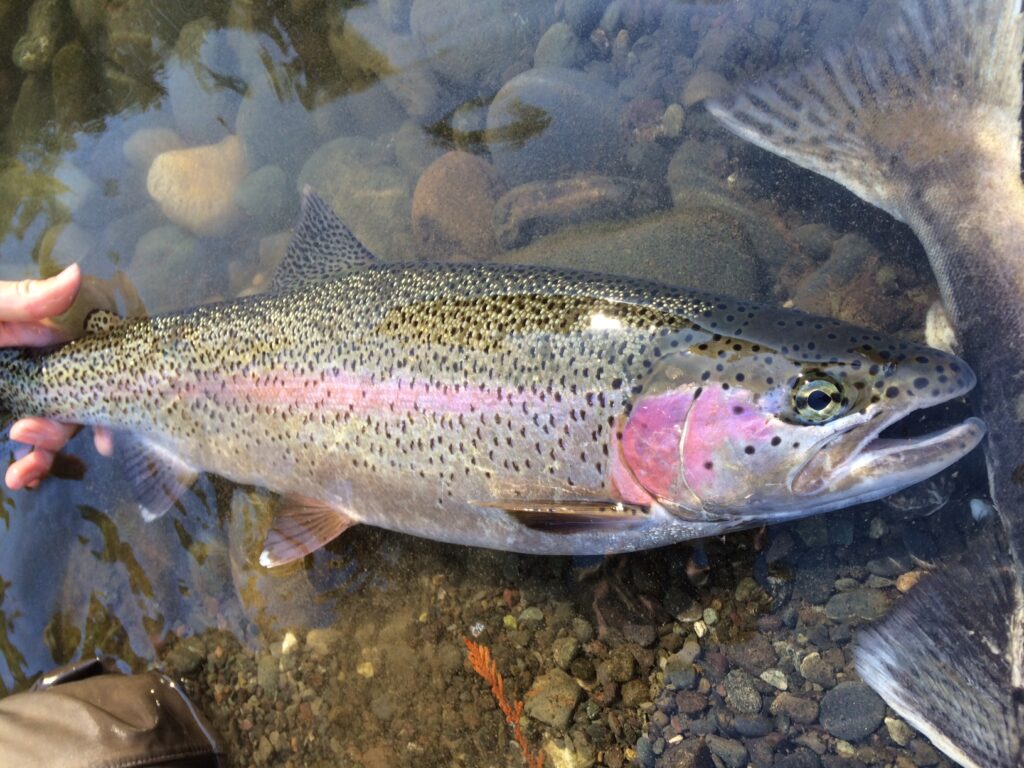
To be effective, and have benefits for Washington’s native trout, it is going to be important for the agency to follow up this process with a broader review of resident trout regulations that address the general trout season, when most anglers are actually targeting trout and most harvest impacts on populations occur.
While we see the potential for positive outcomes, Trout Unlimited will be keeping a close eye on the implementation of the Native Trout Policy. We’ll continue to engage and work with regional fish managers and the Commission to ensure that the policy is consistent with the goal of rebuilding and maintaining sustainable populations of steelhead and resident rainbow trout in Washington.