
An updated proposal to dam the Upper Chehalis would be devastating to the basin’s wild steelhead and spring Chinook, and cost taxpayers vastly more money
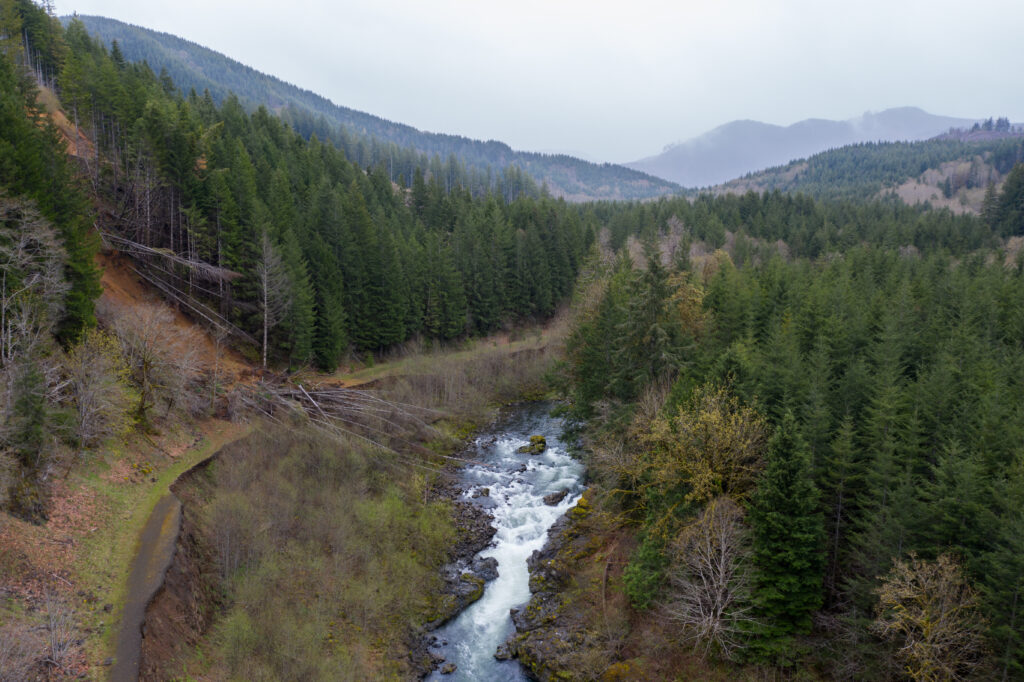
Since its conception, a broad coalition of anglers, conservationists, tribes and state and federal agencies have pushed back on a short-sighted plan to dam the Upper Chehalis River near the town of Pe Ell. The proposed “flood control” structure would have destroyed crucial steelhead spawning and rearing habitat, disconnected wildlife migration corridors, damaged water quality, cost taxpayers a fortune, and barely impacted flooding.
The resounding message: It is our view that this proposed dam is a short-sighted and expensive approach to flood control with too many potential adverse impacts to the Chehalis River wild steelhead and salmon, and does not provide a holistic approach to living with the river using a whole-basin solution that includes fish, tribes, farms, sportsmen, and local communities.
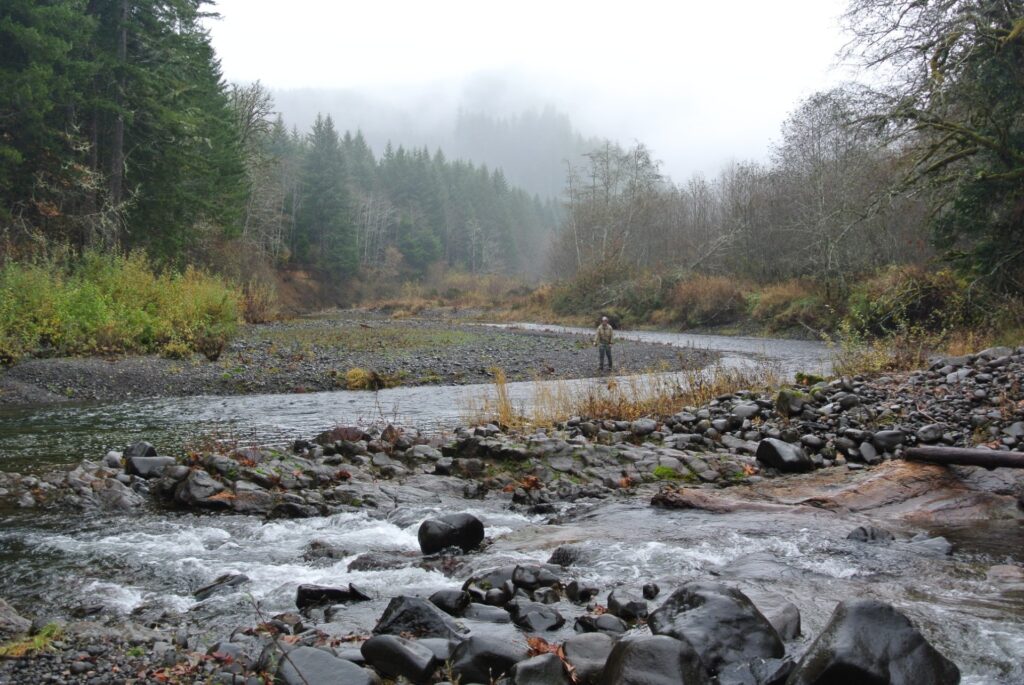
Image: Shane Anderson/Swiftwater Films
Above: An angler at the confluence of the Chehalis River and Crim Creek, an area that would be flooded under the current dam proposal.
Image: Lee First/Twin Harbors Waterkeeper
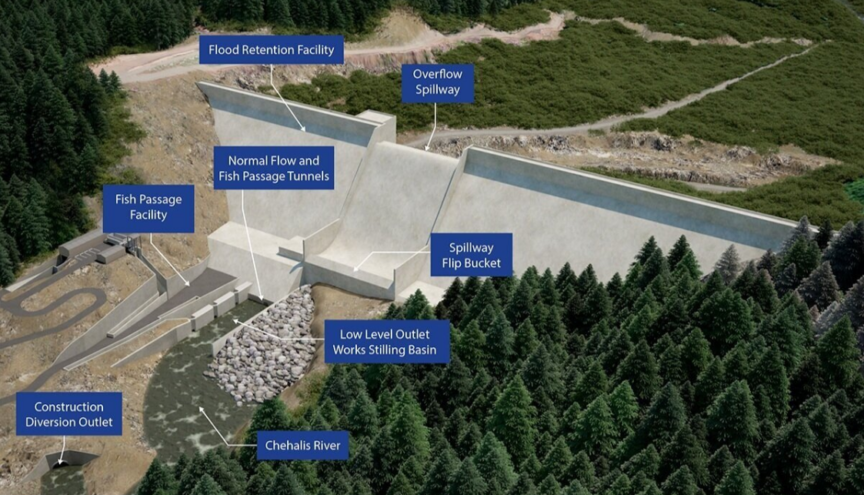
An important alternative solution to the dam continues, meanwhile, the local flood control district has updated their dam proposal and created something even more damaging and expensive. Astoundingly, the revised plan expands the size of the dam and impoundment, shifts the structure and accompanying clear-cut further upstream into critical steelhead and salmon spawning and rearing habitat, and has an estimated price tag of at least $2 billion, without including ongoing maintenance and operations costs.
Speak Up for the Chehalis River’s wild steelhead and salmon
Washington’s Department of Ecology has released a Draft Environmental Impact Statement (DEIS) from, that finds significant adverse impacts across seventeen different environmental elements, including significant reductions of steelhead, spring and fall chinook salmon, and coho salmon populations.
The DEIS is currently open for public review. Anglers and advocates have until midnight on February 4th to submit comments about the dam being proposed on Washington’s Chehalis River.
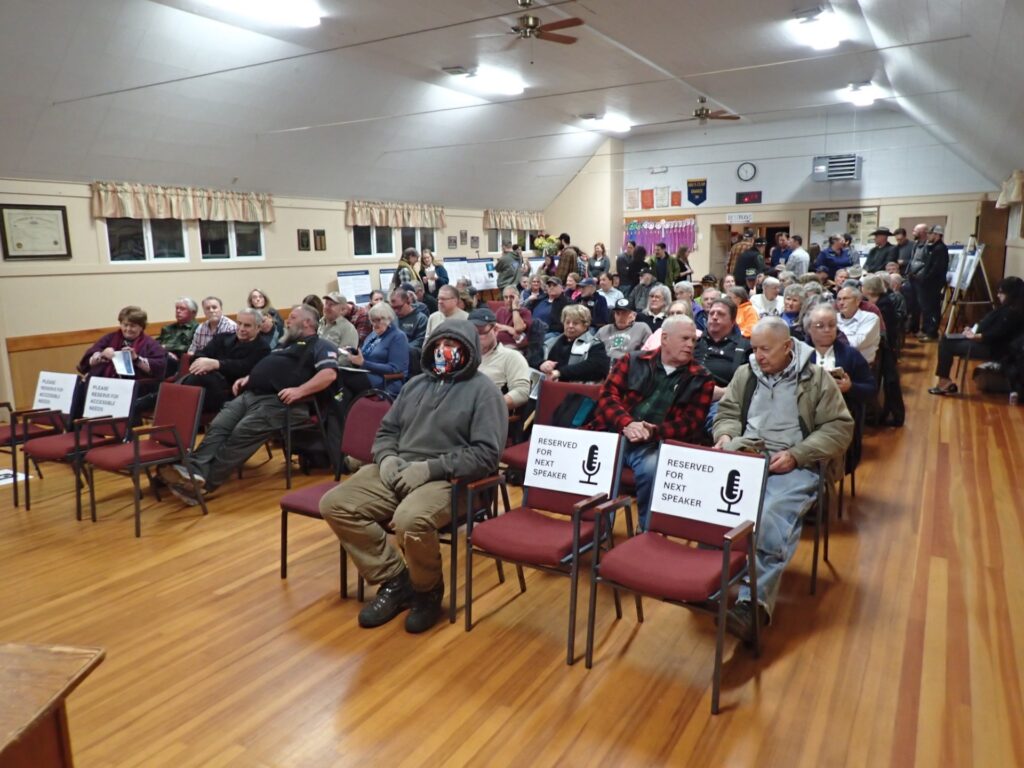
Image: Lee First/Twin Harbors Waterkeeper
With the talking points provided below, please take a moment to submit your own comments on behalf of wild steelhead and salmon and the free-flowing Chehalis River:
- Introduction: You are writing to provide comments on the Department of Ecology’s Draft Environmental Impact Statement (DEIS)
- You do not support a plan to construct a large dam on the upper Chehalis River
- The footprint created by the temporary reservoir will significantly impair spawning habitat spawning and will reduce survival of salmon and steelhead migrating out of and into the upper Chehalis basin
- The site of the proposed dam is located directly in an area in an area with one of the highest spawning densities for wild steelheed, coho, and Chinook. It has also been identified as some of the best rearing habitat for juvenile salmon and steelhead in the Basin. 93% and 87% of Spring Chinook and Fall Chinook redds, respectively, are located withing the proposed temporary reservoir; 32% of coho redds are located within the reservoir footprint
- 15% of the steelhead produced in the basin come from the upper Chehalis River, at or above the proposed dam site, and it represents only 4% of the total habitat
- Steelhead in this upper river section are genetically distinct from steelhead in lower river areas. This section already is critical for steelhead production and protection of life history diversity and will become more important in the face of climate change, as fish, both adults and juveniles, seek cold water refugia at higher elevations in the basin
- As stated in the DEIS, the proposed dam would cause irreparable impacts on all Viable Salmonid Population (VSP) parameters for steelhead and salmon—abundance, productivity, spatial structure, and diversity
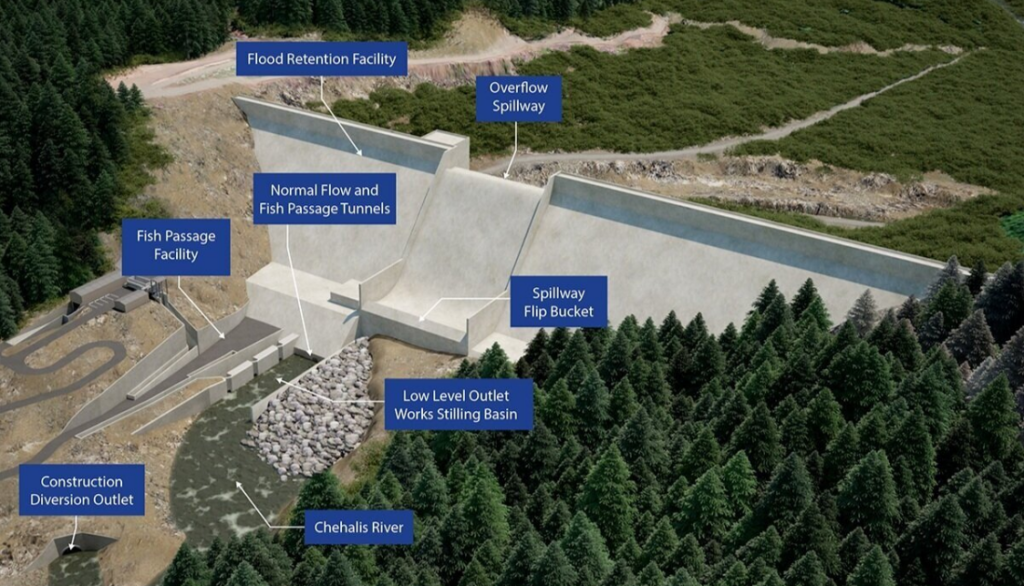
- This revised proposed dam— is 45% wider than the original proposed dam, increasing from a width of 1550 to 2250 feet at the crest—and temporary reservoir would back up and submerge 824 acres and almost six miles of the river corridor above the proposed dam site. It would store water during major flood events and release the water over a period of about a month, with a stated goal to not stop floods, but merely reduce their impact in the many downstream communities, including Chehalis and Centralia along the flood-prone Interstate-5 corridor
- Modeling indicates that water temperatures in the Chehalis River within the reservoir footprint and immediately downstream are expected to increase by up to 2° C. These elevated water temperatures increase stress on juvenile and adult salmonids on an already temperature stressed system
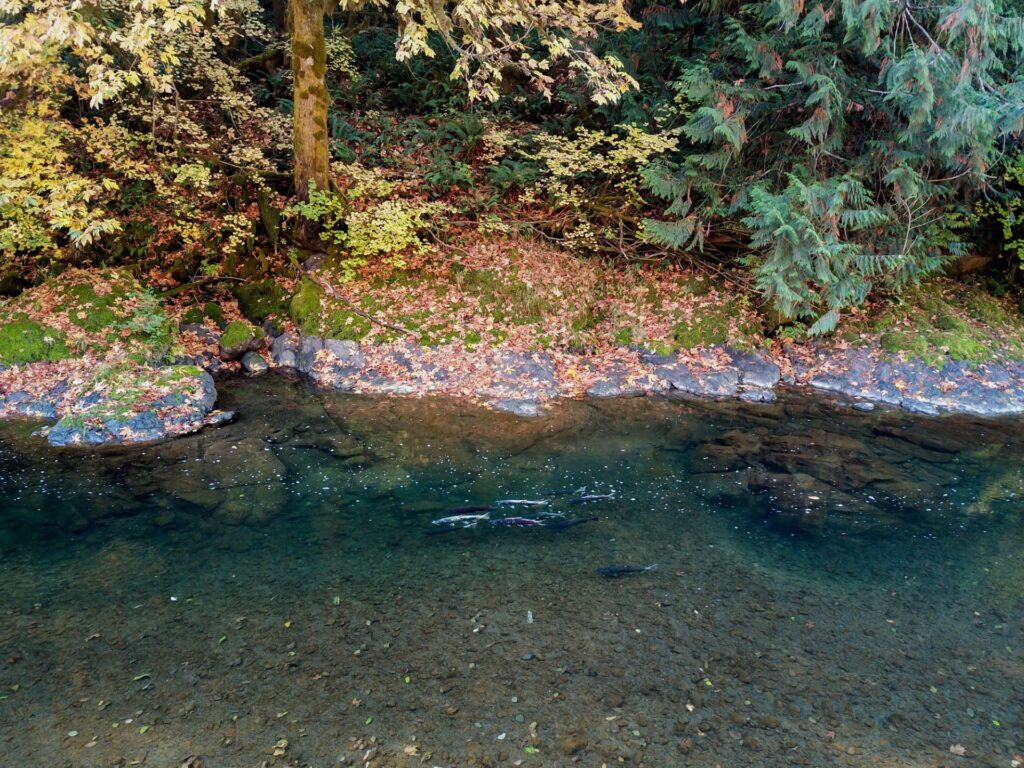
Image: Shane Anderson/Swiftwater Films
You recognize the need for a solution to flooding issues but support a collaborative process that reduces local flood impacts throughout the basin, restores habitat, and supports long-term resiliency of both fisheries and people.
>>SUBMIT YOUR COMMENTS HERE<<
Thank you for speaking up on behalf of the already struggling Chehalis steelhead and salmon to prevent a dam that could seal their fate. Local communities need real solutions for flooding and durable infrastructure, and aquatic ecosystems need better ways forward. This dam is not the answer.
Please feel free to email me if you have any questions or concerns, and thanks for lending your voice for wild steelhead in the Chehalis River!