
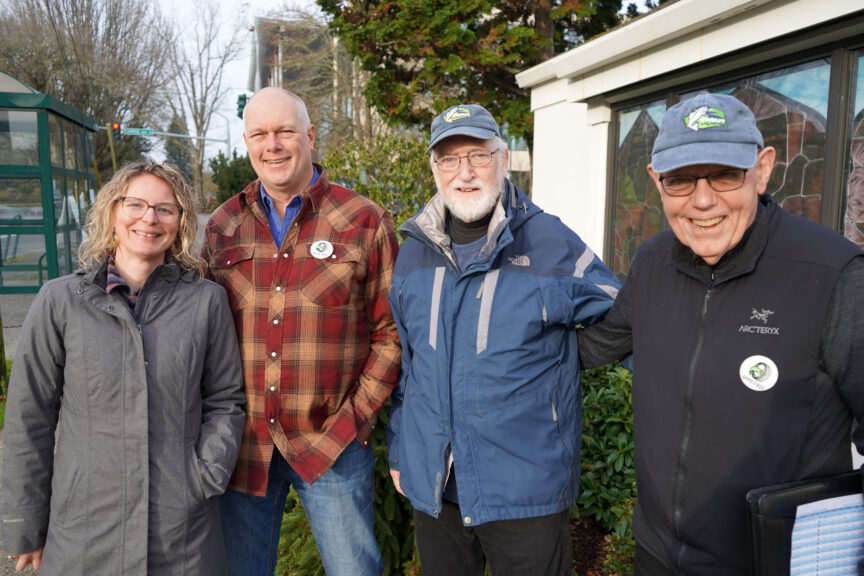
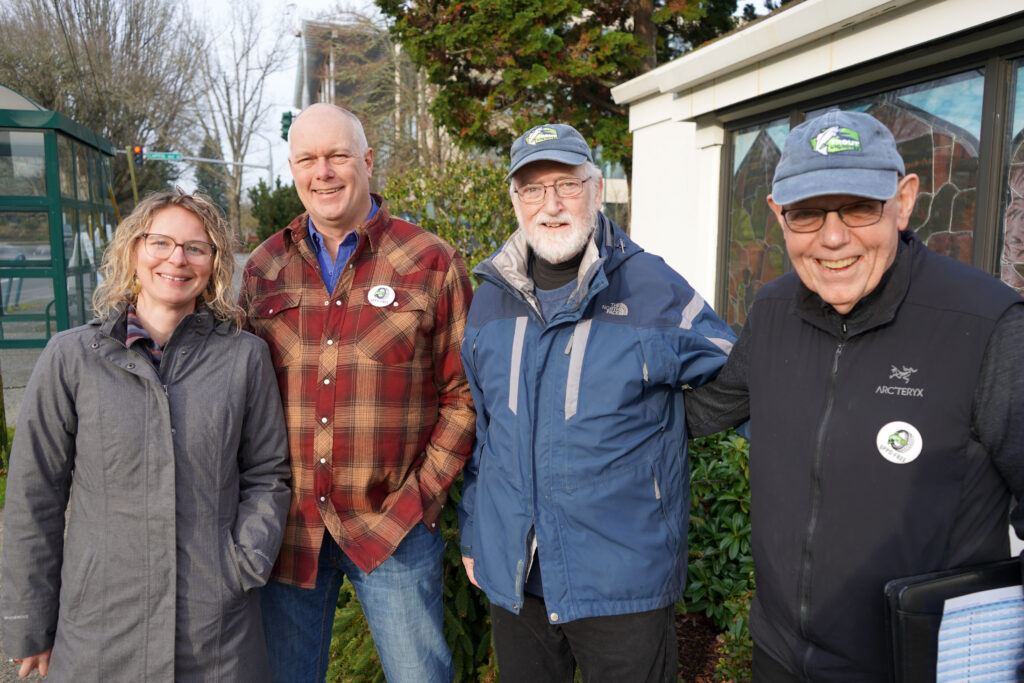
This session Trout Unlimited is working to ban a fish-killing tire chemical and support Puget Sound Steelhead, Lower Snake Dam replacement studies and WDFW management
Washington’s 2026 State legislative session is underway in Olympia. A “short session” in Washington biennial legislative cycle, it will be a mad dash until the session ends on March 12.
Big topics outside of natural resources are likely to dominate political discussion this session. The Governor and legislators are largely focused on the state’s deepening budget crisis, immigration enforcement, and flood recovery.
Banning 6ppd, the tire chemical killing salmon and trout
Trout Unlimited’s major legislative campaign this session is passing legislation phasing out the use of 6PPD in tires.
6PPD, and its environmental transformation 6PPD-Q, were identified by landmark research by the University of Washington and Washington State University as the main driver of urban runoff mortality syndrome in Coho Salmon, and one of the most toxic chemicals ever tested on Coho Salmon. More recent studies have shown the chemical also has major impacts on both Coastal Cutthroat Trout and Steelhead/Rainbow Trout, and that the chemical is as devastating for juvenile fish as it is for adults.
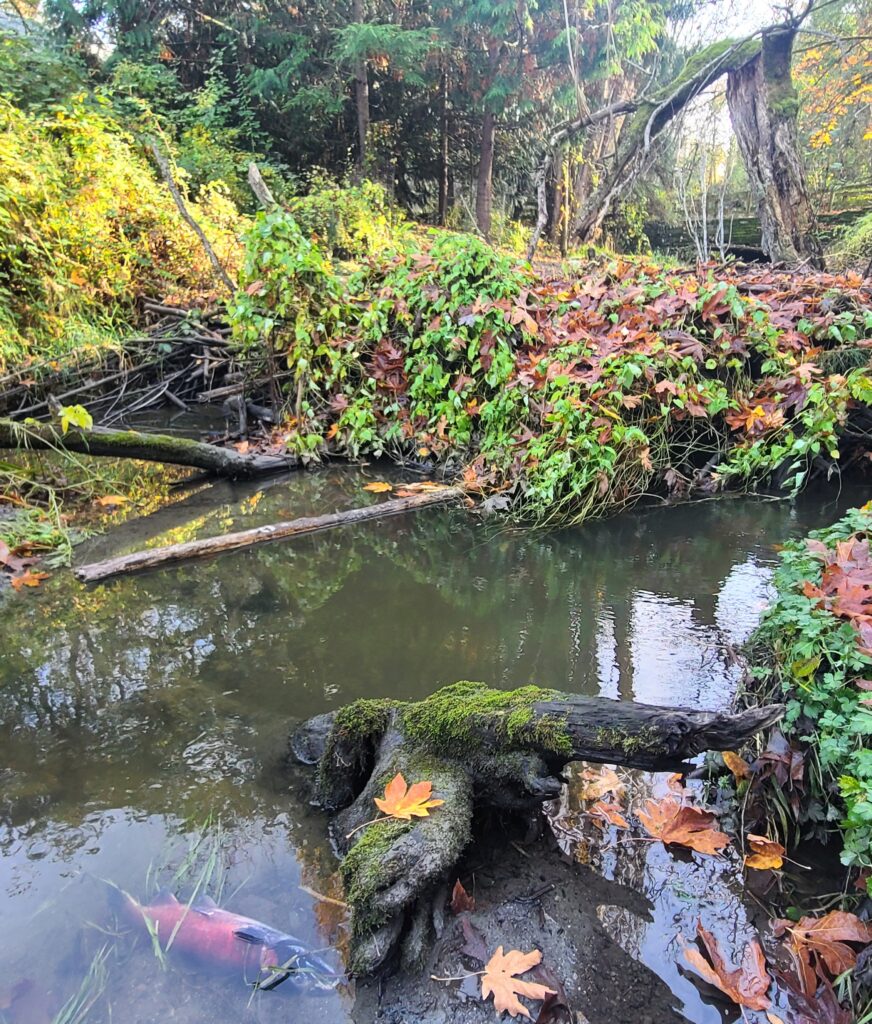
Above: A dead pre-spawn male coho salmon in Seattle’s Longfellow Creek.
For decades, we have known that untreated stormwater kills fish, but this science identified the specific chemical harming fish and provides a new tool for addressing these issues. We can now directly target 6PPD’s use in tires and work to remove this deadly pollution from the ecosystem.
We have worked closely with Seattle Public Utilities, Toxic Free Future, and other partners, and Senator Liias (D-21), Chair of the Senate Transportation Committee, and Representative Hall (D-5), Vice Chair of the House Environment and Energy Committee, to put together a legislative proposal to phase out the use of 6PPD in tires sold in Washington.
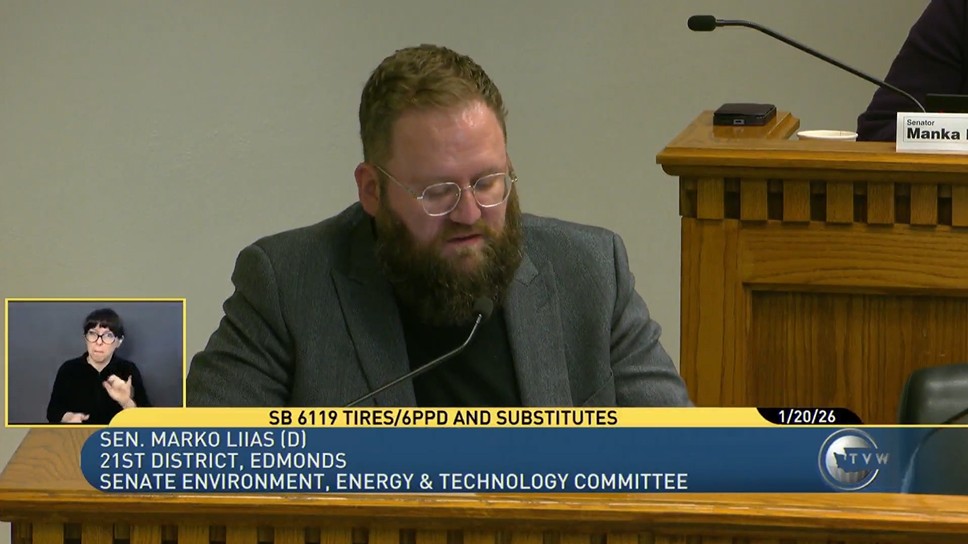
This work has culminated in two bills currently moving through the legislature: SB 6119 and HB 2421 both of which have had policy hearings in their respective committees. You can learn more about the hearings in recent coverage by the Puget Sound Institute and watch some of that testimony here (the bill hearing starts at the one hour, eight minute mark):
The legislation prohibits the sale of tires containing 6PPD, or similarly harmful chemicals, beginning in 2035
This timeline creates an incentive for innovation and early adoption of a safer substitute, and a concrete deadline for doing so. We don’t believe the tire industry will pursue these solutions without an established deadline.
We’re encouraged by recent announcements that several chemical companies believe they have viable alternatives to 6PPD. Of course, any alternative products will need to be tested thoroughly and confirmed as safe options for tire integrity and fish. The legislature provides an adequate timeline for this work. Most importantly, it ends an industry approach that acknowledges the devastating impacts of 6PPD while refusing to make any concrete commitments towards replacing the harmful chemical.
Update: The original version of the bill included fees for tires containing 6PPD. ($3 for auto tires and $6 for large truck tires to cover costs associated with implementing policy, water quality monitoring and cleaning up illegally dumped tires.) That fee has been removed from the House version of the bill now passed out of policy committee and moving through the legislature.
Since the 1960s, 6PPD has been used in nearly every vehicle tire sold in the United States. In Washington State, we are investing millions of dollars to restore salmon and trout spawning and rearing habitat, but at the same time 6PPD is undercutting the impact of those investments every time it washes into our rivers and streams, killing and harming struggling salmon and trout populations.
Washington State has led the research identifying 6PPD’s devasting impact on fish. We believe the state must also be the leader in advancing the solution.
Budget challenges and other bills
Like last session, Washington continues to grapple with a crippling state budget crisis.
As of January 29, we have not yet seen proposals from the House and Senate for how they might make cuts in the supplemental budgets, but we have seen the Governor’s suggestions for how he would address the shortfalls.
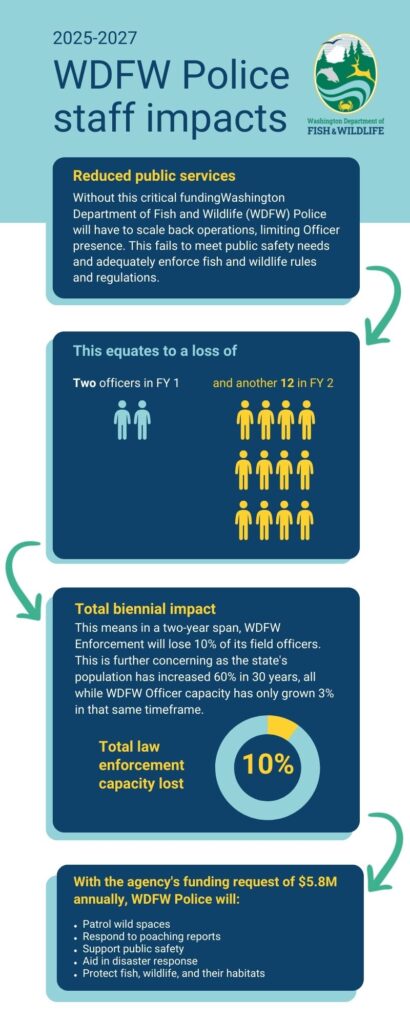
Concerningly, the Governor included a significant cut to WDFW’s enforcement division projected to be as much as 10% of the agency’s enforcement capacity, which is already deeply underfunded. It’s important to keep in mind that State natural resource agencies aren’t the cause of these larger state budget issues but inevitably will bear some brunt of it.
We were pleased to see that Governor Ferguson’s proposed supplemental budget included funding for work to continue on the Snake River Dam replacement studies. This is important work and we will advocate at the Legislature for this funding to be included in the session’s final budget.
Additionally, we will continue to advocate for the Puget Sound Salmon and Steelhead Monitoring funding that was cut last year and would have supported the Skagit/Sauk wild steelhead fishery, among other important conservation and fishing opportunities in Puget Sound rivers. As always, we will call for legislators to continue funding the critical work to restore salmon and steelhead habitat, and protect and conserve water resources, across Washington.
Proposed Steelhead Hatchery Bill
Another bill we’ve been tracking concerns steelhead hatcheries and is sponsored by Senator John Braun (R-20). SB 6241 requires WDFW “In every WRIA as defined in RCW 90.82.020 with a native steelhead population, the department must implement a steelhead wild broodstock conservation program in which volunteers deliver live broodstock to a hatchery or rearing facility.”
We testified in opposition to the bill this week in the Senate Agriculture and Natural Resources Committee. It is our belief that hatchery management decisions directed by RCWs is not how the state should be handling their operations and management. Instead, consideration of hatchery programs should be implemented by the state and based on biological, ecological, and social conditions—or science-based management—by managers at WDFW, treaty tribes, and where applicable, NOAA Fisheries.
Have your voice heard in Olympia
As always, stay tuned here and to the Washington Council of Trout Unlimited for updates and opportunities to engage with your representatives in Olympia.
Especially in a year of tough budget decisions, it is more important than ever to take a few moments, contact your legislators and tell them you want to see the ongoing work to recover Washington’s native salmon, trout and steelhead to be prioritized.