

An experimental conservation hatchery program provides a modest benefit to steelhead populations, but cannot build sustainable recovery on its own
Hatcheries are often utilized as conservation tools to supplement and increase the abundance of populations of salmon and steelhead that have been extirpated or are at risk of extinction across the Pacific Northwest. Despite extensive reliance and public investment in hatcheries to support fisheries and recovery of struggling populations, a large body of scientific evidence demonstrates that poorly run hatcheries can have negative impacts on wild populations.
It might be surprising then, that with the high economic costs and potential risks of hatcheries, that there have been few studies investigating whether conservation hatcheries actually achieve their desired goal of increasing the and maintaining higher abundance of wild populations.
Hood Canal Steelhead Supplementation Project
To investigate this crucial question, researchers from NOAA fisheries, the Washington Department of Fish and Wildlife, the Skokomish, James S’Klallam and Port Gamble S’Klallam Tribes, and the non-profit group Long Live the Kings started the Hood Canal Steelhead Supplementation Project in 2006.
This project was focused on understanding whether conservation hatchery approaches would result in a positive population level response for threatened Hood Canal winter steelhead populations, while also minimizing negative genetic and ecological impacts. This 17-year before-after-control-impact (BACI) study recently wrapped up, and the project team has published a pair of papers focusing on the genetic and demographic impacts of the project.
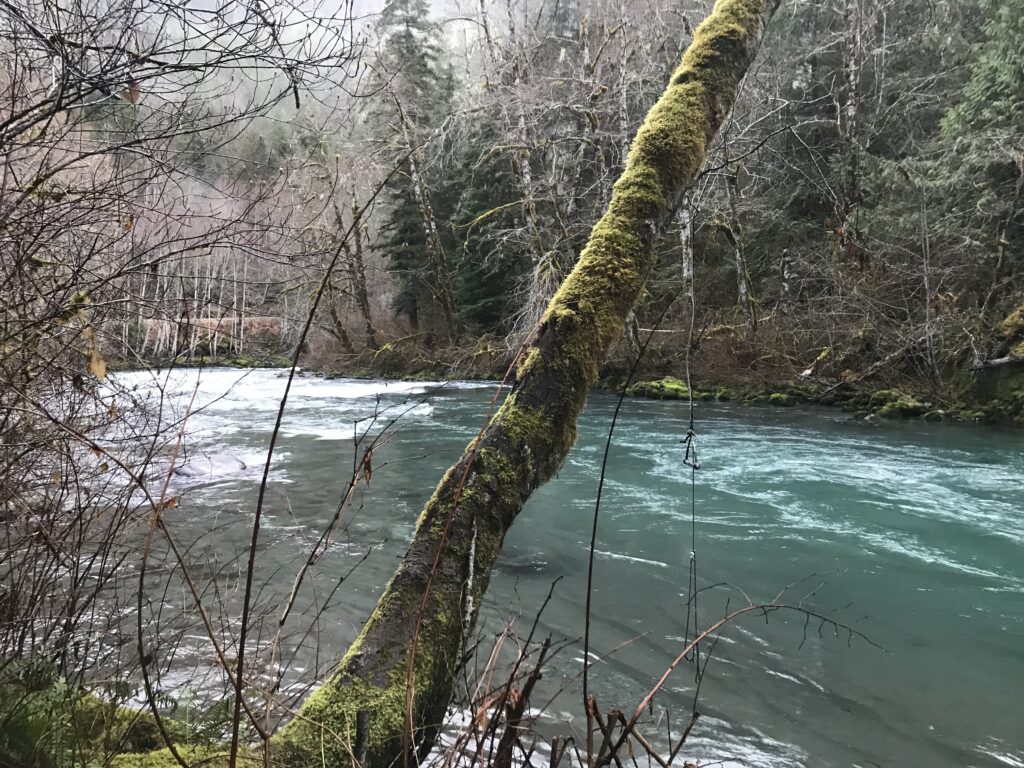
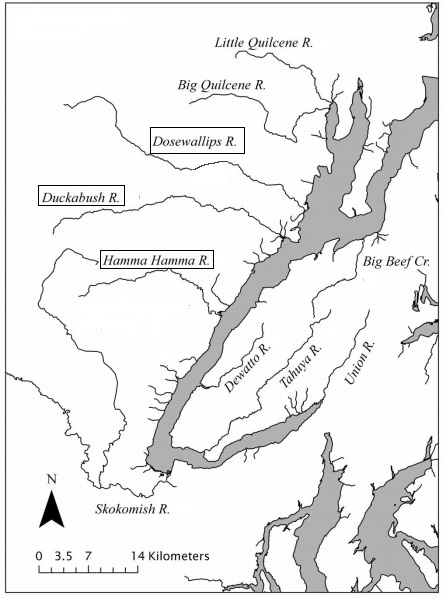
The Hood Canal Steelhead Supplementation Project is an expansion of a pilot project conducted on the Hamma Hamma River that we covered in 2019. It included three treatment populations that were supplemented with hatchery fish (the Duckabush, South Fork Skokomish and Dewatto rivers) and four control populations which were not (the Little Quilcene River, Tahuya River, Union River and Big Beef Creek). Prior to the project, many of these populations were at critical spawner abundance levels. For example, less than 10 fish returned to spawn in the Duckabush River in 2003. As such, there were real concerns that some of these populations may not persist without hatchery intervention.
These watersheds were monitored for four years prior to initiating the program, supplemented for nine years, then four additional years of monitoring occurred after supplementation ended.
Unlike traditional hatchery programs, adult fish were not collected and spawned as broodstock. Instead, fish were allowed to spawn in the wild and then a variety of redds were hydraulically pumped to collect a portion of the eggs. By doing this, the steelhead were able to select their own mates, and a portion of the eggs spawned were left in the wild to complete their life cycle naturally.
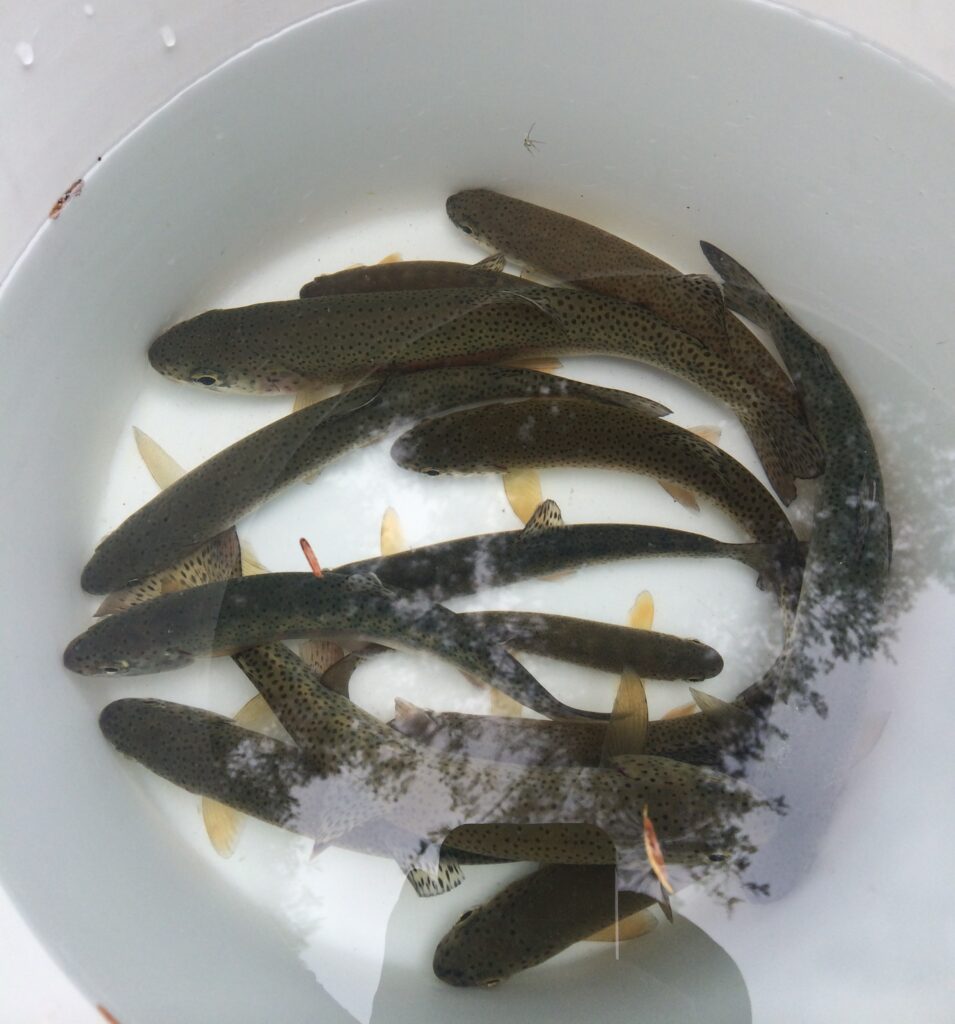
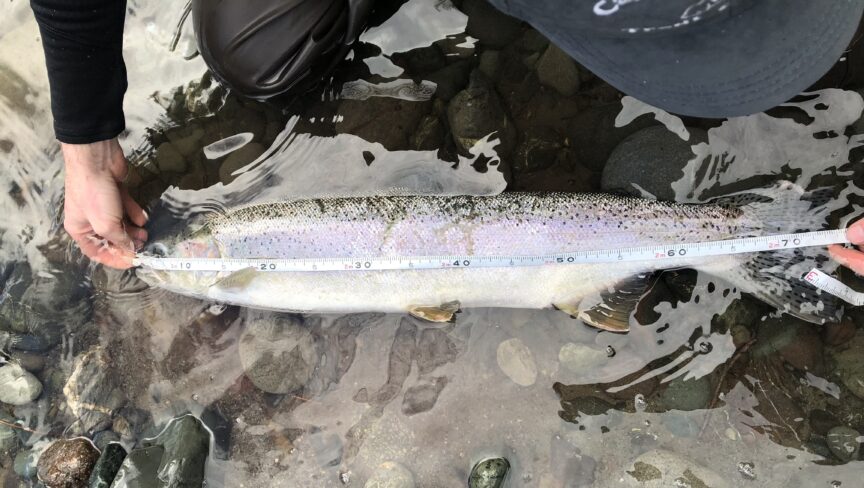
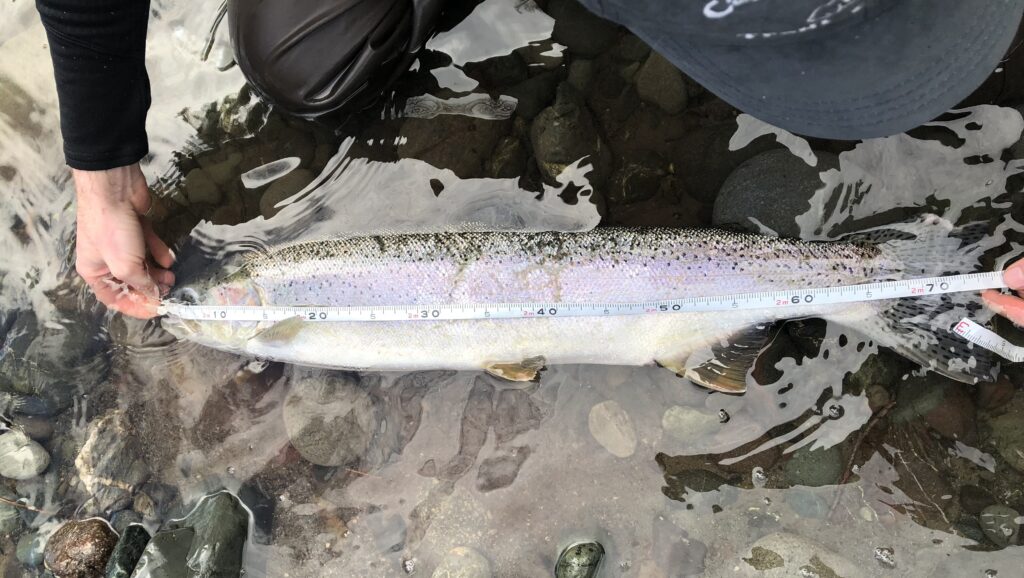
Additionally, instead of just releasing age-1 smolts like traditional steelhead hatchery programs, fish were released from the program at various life stages to better mimic nature. Smolt releases were composed of a small group of age-1 smolts and larger group of age-2 smolts. In addition to smolt releases, the project included an “adult release group” of age-4 to age-6 adult steelhead raised in captivity and released in the rivers ready to spawn.
Finally, releases from the program were relatively small, ranging from 4,239 to 7,375 in the Dewatto, 1,574 to 4,782 in the Duckabush, and 14,769 to 27,838 smolts in the South Fork Skokomish. Adult releases were also relatively small, ranging from 252 to 260 fish in the Dewatto, 135 to 221 fish in the Duckabush, and 71 to 357 in the South Fork Skokomish. These modest releases helped to increase the level of care fish received while in captivity, reduced the risk of disease, and reduced the risk of density dependent effects, such as redd superimposition, or competition due to exceeding the carrying capacity of the rearing habitat in the natural environment.
Together, these approaches were expected to minimize negative impacts to the wild populations, while also boosting the number of total spawners to help restore populations.
What did researchers learn?
So, let’s break down the results of the project, starting with a study by Berejikian et al. that focused on the demographic (spawn timing and abundance) impacts of the project.
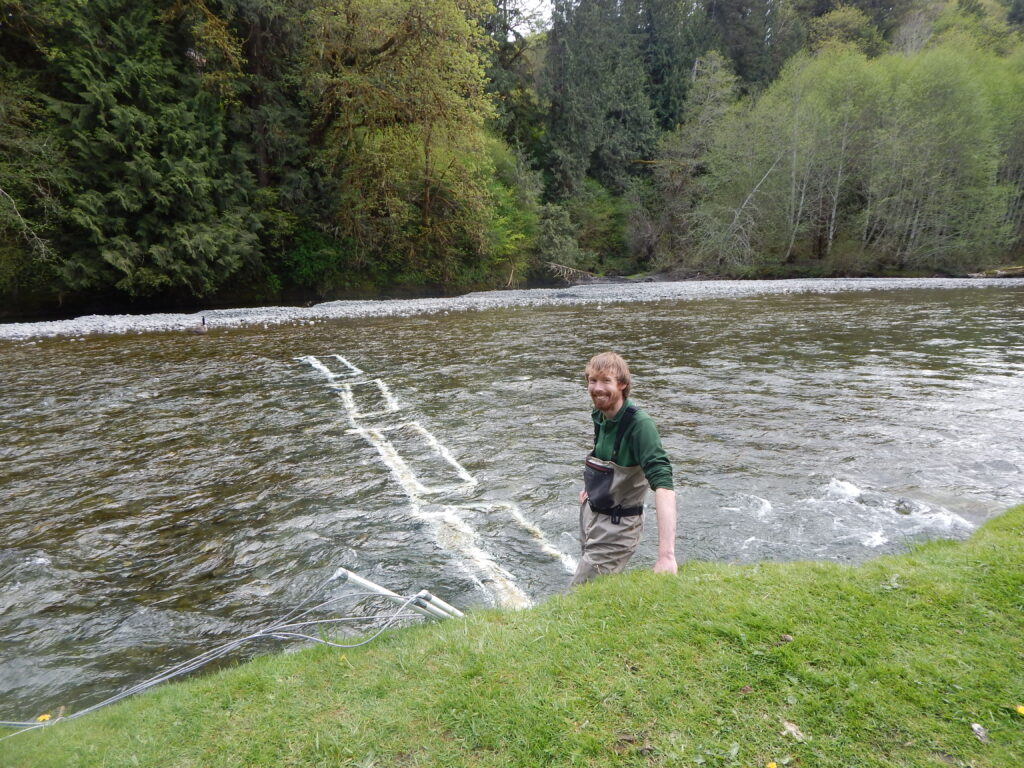
First, throughout the project, spawn timing did not change in either the supplemented or control streams. While other studies of hatchery operations have shown direct impacts to spawn timing due to hatchery supplementation, that impact is typically a result of poor broodstock collection and spawning practices, such as collecting and breeding only early returning fish instead of collecting fish throughout the entire run. This is particularly common with steelhead which may spawn between January and July.
As such traditional steelhead programs that collect and spawn broodstock often select earlier spawning fish, as it is nearly impossible to get the offspring of late spawning fish up to size in time to be released as age-1 smolts. This appears to have been successfully avoided by the Hood Canal Project team by not collecting and artificially spawning adults, and collecting eggs from redds throughout the entire spawning season.
All three supplemented streams saw increased redd counts, including the highest redd counts of the study period during the supplementation phase. During the same study period, three of the four control streams had their lowest redd counts.
However, just one generation after hatchery returns were ended, the redd abundance in the supplemented streams returned to a similar level, or only slightly higher, than before supplementation. In contrast, the control streams experienced a continual but slight decline across the entire study period.
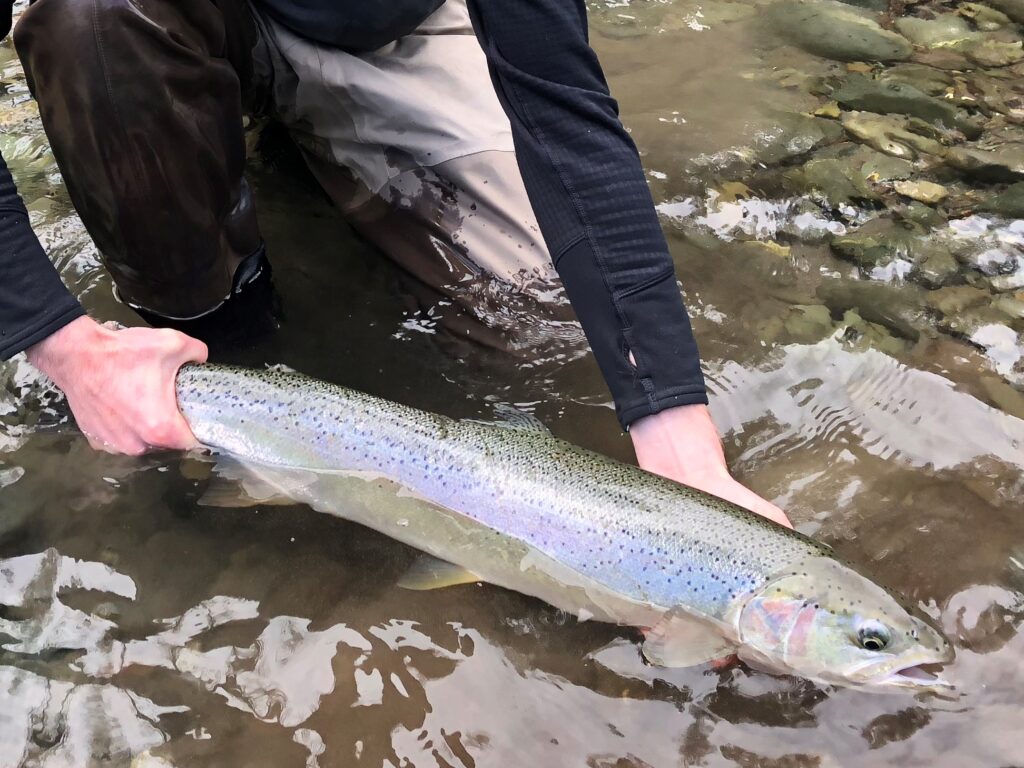
Taken together, hatchery supplementation provided a marginal improvement in redd abundance while also buffering the populations from the decline experienced in the control streams. But the efforts did not provide a major boast in ongoing returns one generation after the programs ended.
What about the project’s genetic impacts reported in the Van Doornik et al. study?
Similar to the demographic results, the genetic impacts effects from supplementation were reported to either have no real impact or were slightly beneficial. Measures of genetic diversity showed that the Duckabush and South Fork Skokomish populations saw a slight increase, from pre- to post-supplementation, while the Dewatto River decreased slightly. The control streams also experienced a mix of increases and decreases across the study period.
A couple of mechanisms may have been at play with genetic diversity results. First, more spawners equate to more genetic material and thus supplementation may have increased genetic diversity by increasing the overall number of spawners. Another possibility is that resident Rainbow Trout, which are particularly abundant in the Duckabush and South Fork Skokomish, may have contributed to the gene pool by spawning with returning steelhead, adding to the diversity.
The study also showed that fish from the adult release groups produced viable offspring in all of the supplemented streams and accounted for an average of between 13.7% (South Fork Skokomish River) and 31.2% (Dewatto River) of all the offspring sampled.
So, on the whole, this project appears to have avoided the documented negative genetic impacts to wild fish populations often reported in other studies on hatchery programs and showed that releases of captively reared adult fish can be an effective approach to aid in supplementation projects.
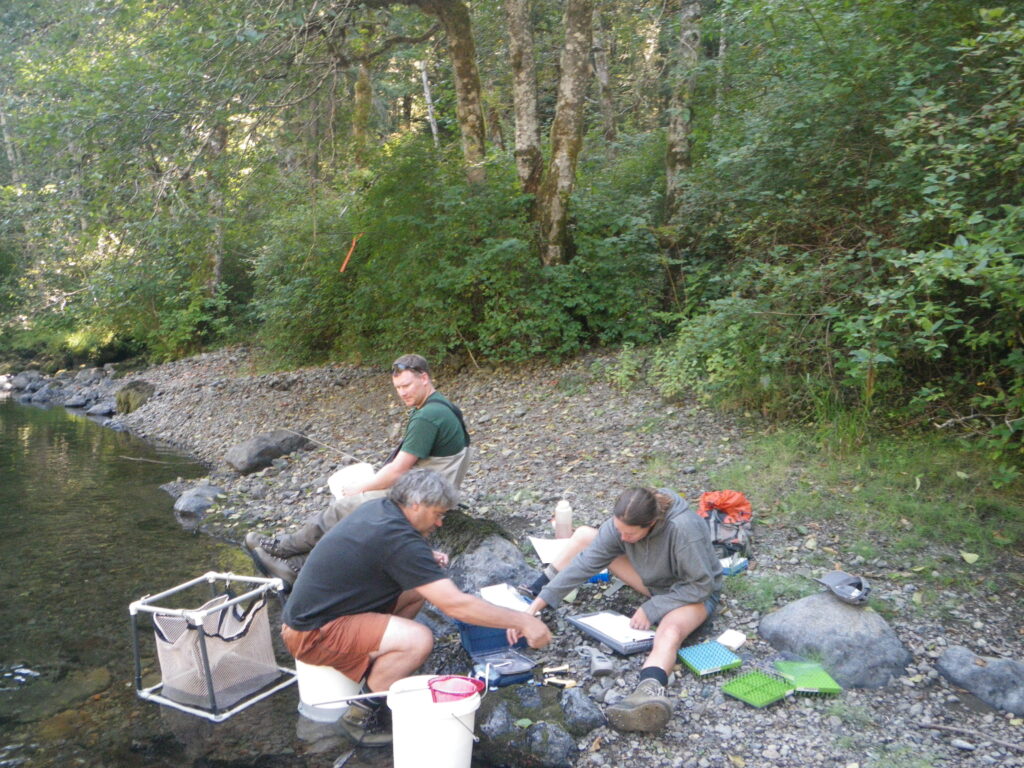
Some potential insights and considerations
The Hood Canal Steelhead supplementation project was a massive undertaking and shows that done right, hatcheries can stem the decline of steelhead populations, while also avoiding the loss of genetic diversity that has been observed in more traditional hatchery programs that collect and spawn fish.
Likely, the most important difference is the fact that adult steelhead were allowed to spawn naturally and fertilized eggs were then collected from the natural environment, something that has rarely been replicated elsewhere because it is an expensive and labor-intense practice that mines wild populations for viable embryos.
Taken together, these results show that carefully planned and operated hatchery programs can be an effective conservation tool but are not going to be a silver bullet for recovery on their own.
While the Hood Canal Steelhead Supplementation Project succeeded at stemming the decline of steelhead in the supplemented streams and resulted in slight increases in population abundance compared to the control group streams, populations were ultimately constrained by limiting factors impacting adult returns and smolt numbers.
At best, the study shows that supplementation provides an important stopgap measure for dangerously low fish numbers while other limiting factors are dealt with.
In the Hood Canal streams, this includes key issues like degraded habitat, poor marine survival, and a loss of juvenile productivity and carrying capacity resulting from depressed populations of other anadromous species such as Chinook and Summer Chum that provide crucial marine-derived nutrients to the stream. Predation and, particularly, the smolt survival bottleneck at the Hood Canal Bridge have a huge impact on these populations, too.
This is why it is essential that whenever conservation hatcheries are implemented to stabilize a struggling population or reintroduce extirpated populations, it is done as a part of a larger integrated recovery plan. Depending on the watershed, this could include a mix of habitat restoration and reconnection, improvements to dam operation, and improvements in fisheries management and migration survival to rebuild a watershed’s ability to grow healthy fish and allow returning adults to survive to successfully spawn. That’s how to ensure fish populations can take advantage of the increases in abundance provided during supplementation and will continue to grow their numbers and diversity once production sunsets.