
WDFW will share forecasts and regulation proposals for the 2026 – 2027 season, but here is what every angler should ask about instead
In what has become an annual event, the Washington Department of Fish and Wildlife (WDFW) is hosting a steelhead townhall meeting on Tuesday, November 10, 2026, 6 pm, to discuss fishing options for the 2026/2027 season on the Washington coast.
While we applaud the agency for engaging with the public in their decision making, as they’ve been doing annually on the coast since 2021, discussions on tweaking individual fishing regulations miss the bigger fishery management and recovery picture on coastal watersheds.
These rivers offer some of the most important regional fishing opportunities each winter, but wild steelhead numbers remain in long-term decline and have frequently missed escapement goals in the last decade. Balancing recovery with conservation-focused fisheries is critical.
If you’re able to attend the town hall this Tuesday, here are the top three issues that should be at the top of every angler’s mind should you engage with WDFW in this public process.
1. The Statewide Steelhead Management Plan, created in 2008, is yet to be fully implemented on the Washington Coast
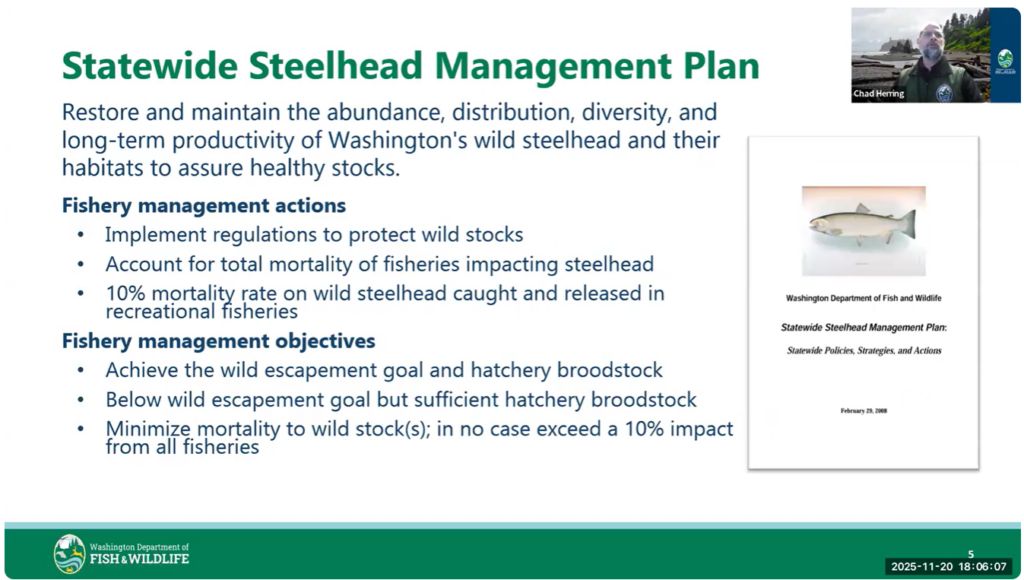
The Statewide Steelhead Management Plan (SSMP) is WDFW’s overarching document for steelhead management and conservation across Washington and will likely be cited repeatedly in the upcoming town halls. Despite the plan being adopted almost two decades ago, many of the key provisions, such as establishing wild steelhead management zones and implementing hatchery reforms to reduce impacts to wild populations, have yet to be implemented.
At the foundation of SSMP implementation is the requirement for WDFW to develop Regional Management Plans (RMPs) in each watershed to guide their fisheries management and monitoring approaches.
WDFW has not developed these required RMPs. As a result, both WDFW and anglers continue lurching from season to season without a larger framework built around balancing angling opportunity and conservation of wild steelhead populations. If RMPs had been developed, these plans would provide a clear framework to manage and monitor fisheries and give anglers clarity and consistency regarding possible fisheries ahead of each seasonal forecast.
For five years, the agency has invested significant resources in an annual public process to tweak individual regulations based on forecasts and proposals from the angling public, instead of prioritizing RMPs that would eliminate the need for this process. With the SSMP nearly 20 years old, these plans are long overdue and something that every steelhead angler should demand from the agency.
2. Coastal Escapement Goals are Older than Many Anglers Attending the Upcoming Townhalls
The escapement goals used to manage steelhead populations on the Washington coast were adopted 41 years ago and for the most part have not been re-evaluated since they were adopted in 1985. This failure has locked our steelhead populations to what we thought the environment could sustain in 1985 and over the past forty years we have been slowly fishing populations down to these outdated escapement floors.
For example, the Chehalis River has failed to meet its escapement objectives in each of the past five years, and the Hoh River has either narrowly made or missed meeting its escapement goal in five out of the past ten years. This has resulted in fisheries closures and significant conservation concerns including Olympic Peninsula steelhead narrowly avoiding being listed under the Endangered Species Act.
By sticking with these antiquated goals, WDFW is failing to leverage the significant habitat restoration investments from the last four decades. While these habitat improvements can improve the juvenile production out of the rivers, WDFW has not adjusted fishery management to allow additional adults back to fully seed the habitat.
Additionally, WDFW and the co-managers at the Quinault Indian Nation (QIN) still have no agreement on escapement goals for the Queets and Quinault Rivers. With the QIN having escapement goals lower than WDFW on these rivers, it has resulted in a disconnect between when WDFW and the QIN can prosecute fisheries. Often the tribal fisheries continue under normal tribal regulations (assuming a surplus over the escapement goal) while fisheries management by WDFW and Olympic National Park have closed the fishery (assuming a forecast below their escapement goal). This disconnect has continued for decades and resolving this discrepancy should be a priority of WDFW leadership.
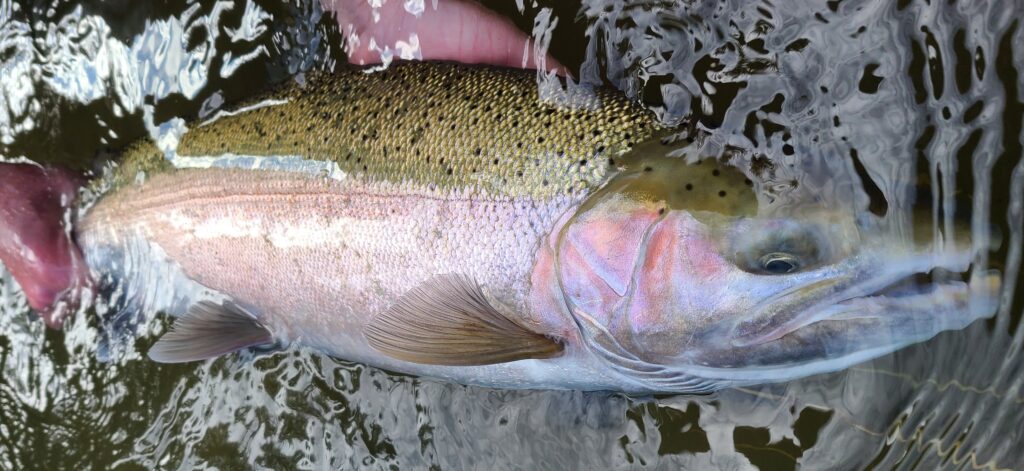
Looking beyond escapement goal alignment between the co-managers, WDFW must consider a more progressive fisheries framework for coastal basins, similar to what was adopted on the Skagit River in 2018 (before the fishery was closed due to funding cuts).
The Skagit steelhead fisheries plan was developed between WDFW and the basin’s three Treaty Tribes and utilizes a tiered abundance approach that sets clear conservation objectives and scales the fishery depending on the number of steelhead in the forecast. It offers a much better approach than a hard (and outdated) escapement goal managed under a principle of maximum sustained yield.
Similarly, WDFW’s science staff have been developing integrated population models and a Management Strategy Evaluation (MSE) approach that can be used to evaluate different fisheries scenarios—or harvest control rules—to balance fisheries impacts with conservation needs. The MSE was also specifically identified by the 2022 Coastal Steelhead Advisory Group as an approach the agency should be using on coastal systems. While this effort is yet to be adopted on the coast, there has been significant work by WDFW staff in the Lower Columbia River region to manage fisheries under this framework.
3. Necessary expansion and improvement of in-season management
This will be the first season where anglers can use the MyWDFW app to record their harvested hatchery steelhead with an electronic catch record card (eCRC). While this is a great milestone for WDFW, eCRCs have much more potential and could be utilized to record released wild steelhead to supplement or replace the costly creel surveys currently being used.
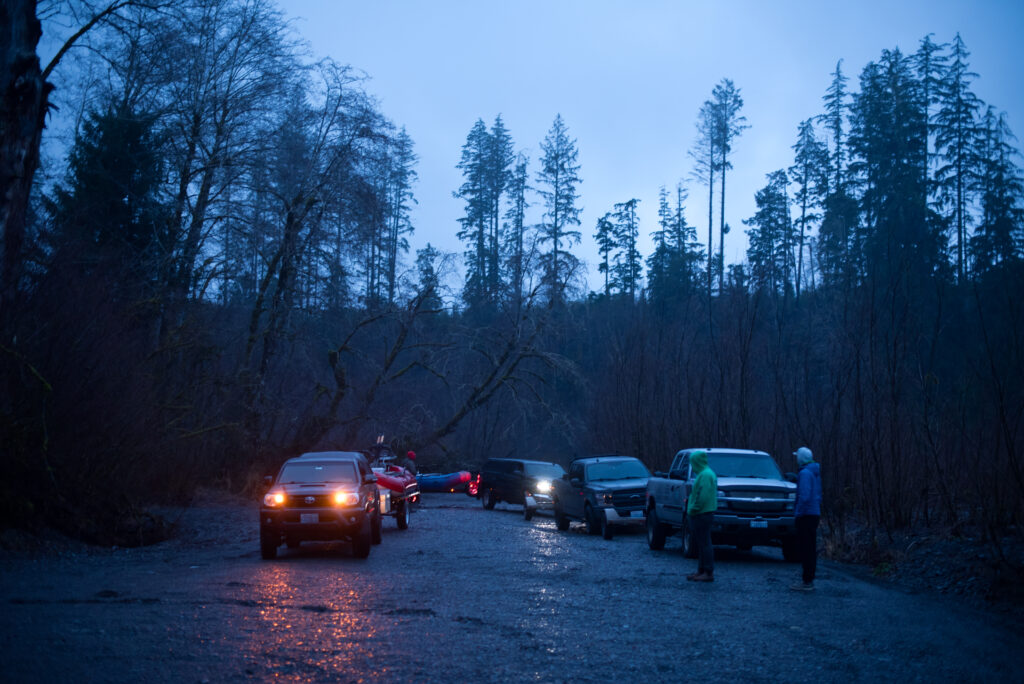
Image: Copi Vojta
The inability to implement creel surveys was specifically identified as the reason that WDFW was unable to open Chehalis Basin tributaries over multiple seasons despite an abundance of hatchery fish available for harvest. Implementing eCRC for released wild fish would be a win-win for WDFW and anglers with better accounting of angler impact rates in almost real-time. This could potentially expand fishing opportunities in times of abundance but also allow WDFW to respond quicker to runs that return below forecast and when there are conservation concerns.
While we recognize Washington State is in a challenging funding environment, WDFW should also pursue options to expand their use of SONAR and provide in-season reporting of steelhead returns to understand how actual returns compare to the pre-season forecast. Like the eCRC, this could allow for improved in-season management and a potential increase in opportunities if returns are trending above the forecast, or a quicker response to conservation if they are coming in below expectations.
Tune-in to the Town Hall
Anglers from around the region, and the rest of the country, are looking forward to the winter season on the Olympic Peninsula’s incredible rivers. Anglers have a powerful role to play in helping push Washington toward better fisheries that provide valuable, sustainable fishing opportunities while prioritizing the long-term health and recovery of wild steelhead populations.